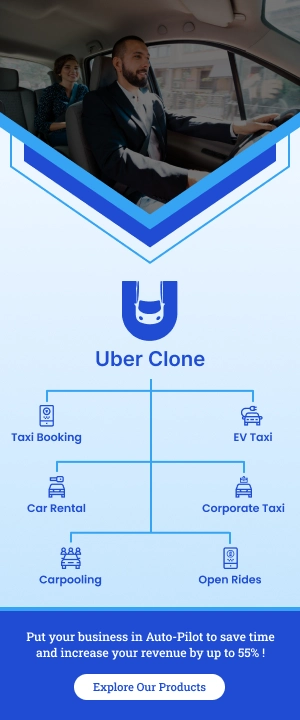
The app development process is extremely complicated, especially when it comes to building a ride hailing app. And on top of that, the Uber clone app vs. custom taxi app dilemma adds further complexity, leaving entrepreneurs confused between these two development approaches.
To help you make the right decision, we have crafted this guide that explains key evaluation factors, the pros and cons of both approaches, and side-by-side comparisons that clarify which approach is best suited to your requirements. So, without any delay, let’s get started.
How to Choose the Right Approach: Key Factors to Guide Your Investment
Making the right investment is vital for a ride-hailing firm’s finances, as the industry is turning increasingly competitive. The ride-hailing market is expected to reach US$342.07 billion by 2030 at a CAGR of 16.61% during the forecast period (2025-2030).
Rising urban density, innovation in auto-driving, and supportive policy frameworks jointly accelerate platform adoption across developed and emerging economies.
Therefore, when planning for that foundational investment in the platform, deciding between a white label and a custom app can be complicated. To facilitate your decision-making process, consider the following factors.
Budget
Finance is the most dictating factor when choosing the development approach. Startups focusing on a single-city market probably have a lower budget. Hence, a white-label approach would be ideal for them. Its ready-made structure reduces development efforts, resulting in a shorter time period.
Timeline
A ready-made app like Uber comes equipped with a pre-built structure and core features, which significantly reduce development time and effort. You simply need to purchase the license and customize the branding to match your business identity. If you don’t need additional customization, you can even launch your branded app within 1-2 weeks.
Business Model
If you’re primarily replicating the standard ride-hailing model, like the Uber business model, a ready-made app is enough. However, if you’re planning to launch a hyper-niche service, opting for a custom app development approach is a better choice.
Technical Maintenance
A ready-made solution provider handles most of the backend maintenance, server management, and app updates when new OS versions (Android/iOS) are released. With a custom app, you are responsible for all the technical maintenance tasks. So, if you can’t afford to have an in-house team or additional maintenance expenses, a ready-made platform is your way to go.
Evaluating the White-Label Option: Pros and Cons of Uber Clone App
An Uber clone app is a pre-built software package designed for entrepreneurs who want to establish their own ride-hailing business. It replicates core features and functionalities (booking, tracking, payment, etc.) of successful ride-hailing platforms such as Uber and Lyft.
As an entrepreneur, you simply license the software, add your logo and branding, and configure its settings according to your business requirements. The vendor may also customize some features or integrate third-party APIs, depending on your needs. So, this is basically what a ready-made solution is.
Before selecting this approach, it’s crucial to understand its pros and cons. Let’s explore how a ready-made app like Uber can benefit your business and what the potential disadvantages are that you may experience with it.
Pros of an Uber Clone App
An Uber like platform can be an ideal solution for both new startups and established taxi businesses that want to expand their operations. Here are some key advantages your business can receive from this approach.
Cost-Effectiveness
The upfront expense for a white-label Uber Clone is extremely low. Since the core structure is already built, you only pay for licensing and configuration, not hundreds of hours of development labor. This is one of the reasons entrepreneurs with limited budgets choose Uber clone for their startups over custom development.
Proven Business Model
Ready-made platforms like Uber are based on the successful Uber business model, which has been tested and proven in various markets around the world. This offers a reliable framework for new ride-hailing startups, significantly lowering the risk of failure.
Built-In Core Features
Ready-made solutions come with all the Uber clone core functionalities, such as GPS tracking, fare estimation, and payment systems, by default. As an entrepreneur, you don’t have to specifically request these features when customizing the app, making the process faster and more streamlined.
Quick Market Entry
Because the foundational structure and core functionalities are already built, Uber clone app development time is relatively shorter. You don’t have to wait for weeks or months to launch your app. These solutions are generally much more flexible, making customization easier and quicker. This is particularly beneficial for highly competitive markets where time is critical.
Cons of an Uber Clone App
While white-label solutions offer a range of advantages, it is also critical to consider their disadvantages for more informed and viable decision-making. Here are some drawbacks to consider if you choose a ready-made platform.
Brand Differentiation
Using a ready-made solution means your app will have similarities with other ride-hailing platforms built on this same solution. This makes it difficult to differentiate your brand and stand out in the market.
Reliance on the Vendor
Some vendors do not offer source code. Therefore, you must rely on them for updates and enhancements. If your developer goes out of business, you could be left with an outdated app that is difficult to maintain.
Don’t Let Competitors Outpace You in the Fast-Paced Mobility Market. Implement Our Uber App Clone to Dominate Your Local Market Quickly and Efficiently.
Exploring the Custom Way: Pros and Cons of Custom Taxi App
A custom taxi app is a bespoke application built specifically for your business, based on your unique business requirements. In this approach, you are the key decision maker in the development process. You receive regular updates on set time durations and are asked for feedback after every milestone.
This level of involvement ensures transparency, allowing you to monitor progress and adjust timelines as needed. This allows you to plan your launch and post-launch activities more accurately.
However, like ready-made solutions, custom taxi apps, too, have their fair share of advantages and disadvantages. It’s essential to understand them thoroughly before making a final decision.
Pros of a Custom Taxi App
Custom taxi apps offer higher flexibility and reliability compared to other options. Here are some key advantages you can expect when taking the custom app development approach.
Complete Customization
Custom taxi apps are highly customizable. You can design the app to reflect your brand’s identity, incorporate unique features aligned with your local market, and craft a user experience tailored to your target audience.
Total Control Over Development
As an entrepreneur, you are involved in every phase of the development process. You dictate the key decisions, such as what features to include and how the apps should look, and which technologies to use for development. Such a level of involvement allows you to ensure that your app is being crafted the way you want.
Source Code Ownership
Since the app is built specifically for your business, you get to own the complete source code, enabling you to scale and customize your platform in the future. When needs arise, you can hire your own in-house development team and make changes without relying on the original app creators.
Cons of a Custom Taxi App
Custom app development provides capabilities that white-label solutions may lack. However, it also has its fair share of disadvantages that you must consider to evaluate whether this approach will suit your requirements or not.
Long Development Timeline
Building an app from scratch requires more time, as it involves numerous phases, including discovery, design, development, testing, and deployment, during which significant time is spent on development. Moreover, any unexpected technical challenges or changing requirements can further extend the timeline.
Higher Development Costs
Custom apps usually cost more than ready-made solutions. Building a taxi booking platform from scratch requires a larger team and a significant amount of time. Since the expense is directly associated with the number of professionals and their labor fees, this approach can cost significantly more depending on your workforce and timeline.
Initial Risk
As you develop a new product, there is an inherent risk that the design may not appeal to users or that features might contain bugs that require expensive fixes after launch. These are some potential risks that may affect your business operations or user experience.
Side-by-Side Uber Clone App vs. Custom Taxi App Comparison
The choice of development approach comes down to which set of trade-offs you’re most comfortable with. To give you a better idea of which approach would be more feasible for your taxi business, let’s evaluate both of them side-by-side with these factors.
| Factor | White-Label App | Custom App | Who Wins? |
|---|---|---|---|
| Time-to-Launch | Lower | Higher | White-Label App |
| Code Ownership | Depends on Vendor | Always | Custom App |
| Scope of Customization | Might Be Lower | Highly Customizable | Custom App |
| Risk of Bugs | Low (Pre-Tested) | High (Tested from Zero) | White-Label App |
| Cost-Effectiveness | Lower | Higher | White-Label App |
| Need for Technical Team | Low (Vendor Handles Backend) | High (Requires a Dedicated Team) | White-Label App |
| Scalability | Moderate (Depends on Vendor’s Platform) | Unlimited (Built by You) | Custom App |
As the table shows, white-label apps appear to have an edge in the comparison. However, deciding between ready-made solutions and custom taxi apps isn’t all black and white. Every business is unique and may have its own nuances.
So deciding between these approaches requires thorough evaluation. If that is challenging for you, consult an expert for better decision-making.
Final Thoughts
For entrepreneurs, the Uber clone app vs. custom taxi app dilemma has always been persistent. Since these two approaches have their own pros and cons, making a firm decision is a little complicated. This article sheds light on various aspects of these approaches to help you make a more informed decision.
If you’re planning to adopt a white-label approach, our Uber app clone is an ideal choice. It is a highly customizable solution with a stunning suite of features that offers efficiency, streamlines business management, and provides an exceptional user experience. Interested in learning more about our solution? Reach out to schedule a free demo and receive a personalized quote.
FAQs